
If your shower glass is always spotty and your water heater pops and rumbles, hard water is probably the cause. Here’s what it does inside your water heater, the warning signs, and what you can do about it.
What “hard water” actually means
Hard water contains a lot of dissolved calcium and magnesium. These minerals are harmless to drink, but when water is heated they come out of solution and form scale [1]. Much of Florida’s water comes from limestone aquifers, so hard water is common across Northeast Florida.
What hard water does to a water heater
- Scale on the bottom of the tank. Minerals settle under the water and insulate the burner or elements, so they run longer and use more energy [2].
- Popping and rumbling. Water trapped under the sediment boils and makes noise.
- Less hot water. Sediment takes up space in the tank.
- Earlier failure. Overheating at the bottom of the tank stresses the steel and lining.
- Tankless units clog. Scale builds up in the heat exchanger, causing error codes and reduced flow.
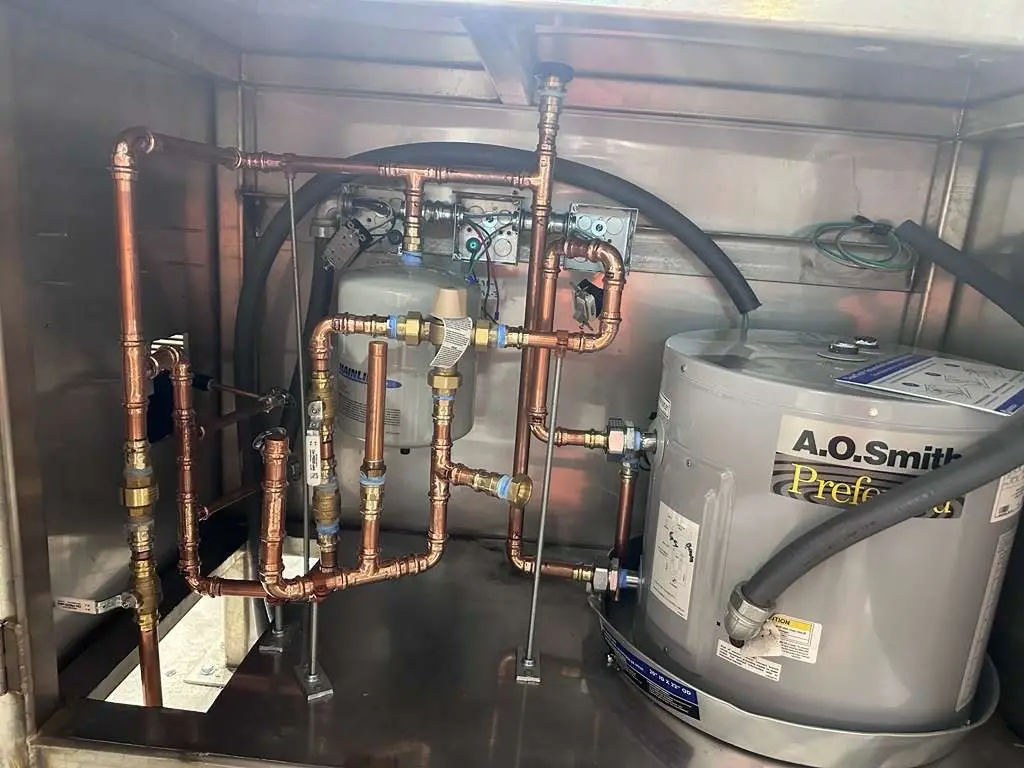
How to protect your water heater
1. Flush the tank once a year
Draining sediment from the tank restores efficiency. Tankless heaters need a descaling flush. See water heater maintenance.
2. Check the anode rod
This sacrificial rod corrodes so your tank doesn’t. Replacing it every few years is cheap insurance.
3. Treat the water at the source
A water softener removes hardness minerals before they reach your heater, fixtures and appliances.
When to call a plumber
Call if the tank is leaking, the water is rusty, or the heater is over 10 years old and noisy. See water heater repair and replacement.

Licensed Florida plumbing contractor (CFC1434171) with 20+ years of experience.
- U.S. Geological Survey, Hardness of Water
- U.S. Department of Energy, Energy Saver: Water Heating